Resize Image Techniques: Pixels vs Percentage
Discover the best techniques for resizing images on your website. Learn how to use pixels vs. percentage for optimal image quality and responsiveness.
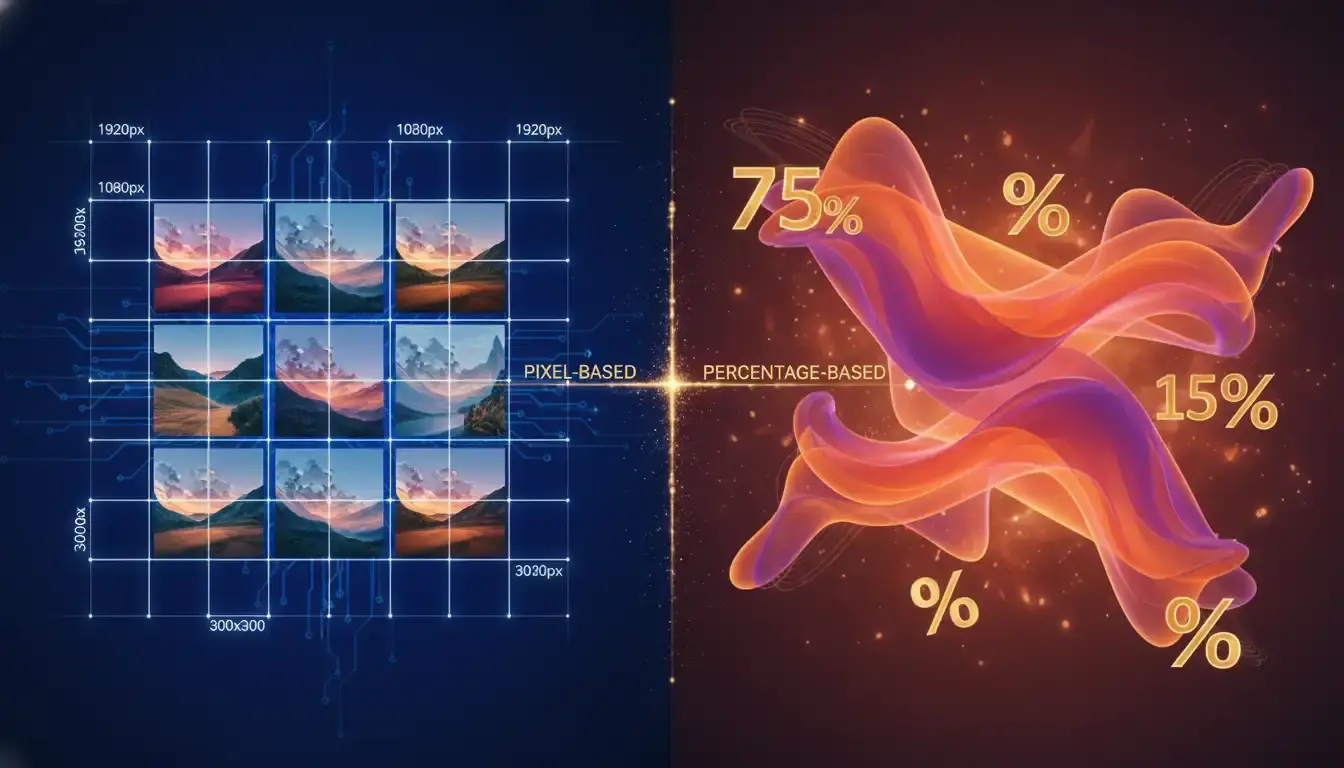
Are you having trouble finding the right balance between image quality and file size for the web? You're not alone. The solution to this problem is to learn about the different image resizing methods available.
There are two main ways to resize images: using pixels or percentages. But what's the difference, and how do you pick the best technique for your needs? It all depends on what you want to achieve, like optimizing for the web.
Getting the resizing right is key to making your images look good and keeping file sizes small. This is important for a good user experience on your website. Knowing the difference between pixels and percentages helps you make smart choices about how to resize images for web effectively, especially when using Personalized Recommendation Systems that rely on specific aspect ratios.
Understanding Image Resizing Fundamentals
When you resize an image, you change its size. This can affect its quality a lot. Knowing how to resize images right is key to keeping them looking good.
What Happens When You Resize an Image
Resizing an image means changing its pixel size or scaling it. You can use different image resizing methods. These include changing pixels or scaling by percentage.
Resampling vs. Resizing
It's important to know the difference between resampling and resizing. Resizing changes an image's size without changing its pixels. Resampling adds or removes pixels to get the size you want. This can impact image size optimization.
Impact on Image Quality
The quality of an image after resizing depends on the method and how much you resize it. Too much resizing can make the image lose detail and clarity. This shows why image compression techniques are important for keeping images looking sharp.
Why Proper Image Resizing Matters for Your Website
Proper image resizing is very important for your website. It affects how fast your site loads and how users feel when they visit. If images are not the right size, it can really slow down your site.
Impact on Page Load Speed
Big, unoptimized images can make your website slow. Resizing images for the web makes them smaller and faster to load. This is important to keep visitors happy and your site running well.
Effect on User Experience
Images that are the right size make your website feel smoother and more fun to use. They make sure your content looks good on all devices. Image size optimization helps your site look good on any screen size.
SEO Implications of Image Sizing
SEO implications of image sizing are big. Search engines like websites that are fast and easy to use. Making sure your images are the right size can help your site rank better in search results.
Pixel-Based Image Resizing Explained
Pixel-based image resizing changes image sizes in pixels. It's great for web design or print-ready images. You get precise control over your images' size.
How Pixel Dimensions Work
Pixel dimensions are the width and height of an image in pixels. Resizing an image in pixels changes its pixel count. This is handy for image rescaling tips to fit images in specific spaces.
Step-by-Step Guide to Pixel-Based Resizing
Resizing an image in pixels is simple. First, decide on the new size in pixels. Then, use resize image software to change the image size.
Setting Width and Height in Pixels
To resize an image, set its width and height in pixels. Most software makes this easy. For example, Adobe Photoshop lets you set exact pixel dimensions.
Maintaining Aspect Ratio
Keeping the aspect ratio is key to avoid distortion. Most tools let you lock the aspect ratio. This is a crucial pixel-based resizing technique.
By following these steps and using the right tools, you can resize images effectively. You'll get the size you want without losing image quality.
Percentage-Based Image Resizing Techniques
Percentage-based resizing makes images fit different screen sizes and devices. It's great for web designs that change as you view them. This method helps images look good on any device.
How Relative Sizing Works
Relative sizing makes images grow or shrink based on their container's size. This keeps the image's shape and makes sure it's clear and visible.
Step-by-Step Guide to Percentage-Based Resizing
To resize images by percentage, you need to know how to set their size relative to their container. This involves understanding how to work with parent containers.
Setting Width and Height in Percentages
Setting width and height in percentages means the image size changes with its container. For example, an image set to 50% width will take up half the container's width. This makes layouts flexible and adaptable.
Working with Parent Containers
The size of the parent container affects the image size in percentage-based resizing. You should think about the container's size and how it changes on different devices. This ensures your images look great on any screen.
Learning how to resize images by percentage helps make web designs more flexible and user-friendly. It improves the experience on a wide range of devices and screen sizes.
Pixels vs. Percentage: Which Method to Choose?
Choosing between pixels or percentages for image resizing depends on your project's needs. This includes device compatibility and responsiveness. When making a website, think about how images will look on different devices.
Comparing Performance Across Devices
Pixel-based resizing gives fixed dimensions, which is good for precise control. But, it's not the best for responsive designs since it doesn't change with screen size. Percentage-based resizing, on the other hand, offers flexible sizing. It's great for designs that need to fit different devices.
Use Cases for Pixel-Based Resizing
Pixel-based resizing is good for fixed layouts or when an image must be a certain size for branding. It's also useful for images that must be shown at a precise size, like logos or icons.
Use Cases for Percentage-Based Resizing
Percentage-based resizing is perfect for responsive designs that need to adjust with the screen size or device. It's ideal for websites that must work well on many devices, from desktops to mobile phones.
Essential Resize Image Techniques for Different Scenarios
Image resizing isn't a one-size-fits-all process. Various contexts need tailored approaches. For example, print, web, e-commerce, and social media each require unique techniques.
Resizing Images for Print vs. Web
For print, high-resolution images are key for clarity and detail. Web images, on the other hand, can be optimized at lower resolutions. This helps improve page load times.
Resizing Images for E-commerce Product Displays
E-commerce platforms need images that look good and load fast. Consistent aspect ratios and compressed images boost user experience and conversion rates.
Resizing Images for Social Media Platforms
Social media platforms have different image needs. Knowing these specs is crucial for effective resizing.
Facebook and Instagram Requirements
Facebook and Instagram have unique image size guidelines. For example, Facebook suggests a minimum size of 1080 x 1080 pixels for the best display.
Twitter and LinkedIn Specifications
Twitter and LinkedIn also have specific image size rules. Twitter advises images of at least 440 x 220 pixels for the best display.
Tools and Software for Effective Image Resizing
You can resize images with many tools and software. Each has special features. Your choice depends on what you need, like editing level, use frequency, and device type.
Desktop Applications
Desktop apps have strong image resizing tools. Adobe Photoshop is a top pick, with advanced options.
Adobe Photoshop Techniques
Photoshop lets you resize images in several ways. You can use the "Image Size" dialog box to change dimensions and resolution.
Free Alternatives like GIMP
GIMP is a free option. It's like Photoshop but cheaper, with great resizing features.
Online Image Resizing Tools
Online tools are quick and easy to use. They're perfect for occasional resizing and support many image formats.
CMS Built-in Resizing Features
Many Content Management Systems (CMS) have built-in resizing tools. They let you adjust image sizes right in your website's backend. This makes your workflow smoother and keeps your site looking consistent.
CSS and HTML Methods for Image Resizing
CSS and HTML are great for resizing images. They help images look good on all screens and devices. This makes sure your images are always displayed well.
Using CSS to Control Image Dimensions
CSS has many ways to adjust image sizes. The max-width property is very helpful.
The max-width Property
With max-width: 100%; an image won't get bigger than its container. This makes it fit any screen size.
Using CSS Flexbox for Images
CSS Flexbox is also great for images. It lets you line up and change image sizes easily. Just put images in a flex container.
HTML Attributes for Image Sizing
HTML has width and height attributes for image sizes. But, they might not work for all screen sizes.
Combining CSS and HTML for Optimal Results
For the best look, mix CSS and HTML. Use HTML for basic sizes and CSS for style and flexibility. This way, your images will fit any screen perfectly.
Responsive Image Techniques for Modern Websites
Responsive images are key in modern web design. They help websites work well on all devices. This is important for a good user experience and for SEO.
Using the srcset Attribute
The srcset attribute lets you choose the right image for each screen size. This cuts down on bandwidth and speeds up page loading. You can set up different images for different screen sizes or pixel densities.
CSS Media Queries for Image Sizing
CSS media queries adjust styles based on screen size or resolution. They help size images correctly for different devices. This makes images look great on any device.
The picture Element for Art Direction
The picture element is great for art direction in responsive images. It lets you use different images for different screen sizes or orientations. This is useful when you need different images for different views.
Browser Support Considerations
When using responsive images, check browser support. Most browsers support srcset and picture. But, always test your work in different browsers to make sure it works.
Common Image Resizing Mistakes to Avoid
Proper image resizing is crucial for a good website. There are common mistakes to watch out for. It's important to balance image quality and file size for the best user experience.
Distorting Aspect Ratios
One big mistake is changing an image's aspect ratio. This happens when the width and height aren't adjusted right. Always keep the aspect ratio the same when resizing.
Overcompressing Images
Overcompressing images makes them look bad. It's key to find the right balance between size and quality. Use tools that let you see the image before saving.
Ignoring Mobile Users
Most people use mobile devices to surf the web. Ignoring this can hurt your website's performance. Use a mobile-first approach to make sure images look good on small screens.
Testing Across Multiple Devices
Always check your website on different devices. This helps spot any image resizing problems early on.
Mobile-First Approach to Image Sizing
Designing for the smallest screen first is smart. It makes sure images work well on mobile devices. Use responsive image techniques like srcset and sizes to serve the right image size for each device.
Advanced Image Resizing Strategies
Advanced image resizing techniques can make your website run better. They help improve how users experience your site and make it more efficient.
Lazy Loading Techniques
Lazy loading loads images only when they're seen. This method greatly cuts down initial page load times. It makes your website perform better. You can use JavaScript libraries or HTML attributes for lazy loading.
Using SVG for Scalable Graphics
SVG (Scalable Vector Graphics) lets you have graphics that don't lose quality when scaled. This makes SVGs perfect for designs that need to change size. Use SVG for logos, icons, and other graphics.
When to Use SVG vs. Raster Images
Choose SVG for graphics that need to grow or shrink, like logos and icons. Raster images (JPEG or PNG) are better for photos and complex images that don't need to change size.
Converting Raster Images to SVG
To turn raster images into SVG, use vector graphics software like Adobe Illustrator. You trace the raster image to make a vector version. Then, save it as an SVG file.
Conclusion
Choosing the right image resizing method is key for a good website. It affects how fast your site loads and how users feel when they visit. Knowing the basics and best practices is crucial.
With the tips from this article, you can resize images well for the web, print, and social media. Don't make mistakes like changing aspect ratios or making images too small. Use CSS and HTML to manage image sizes.
Good image resizing balances quality and size, considering all devices and screen sizes. This improves your site's speed, user experience, and search rankings.
Now, you know how to resize images for your website. It's time to apply what you've learned and make your images work better.
FAQ
What is the difference between resizing an image using pixels and percentage?
Using pixels means setting the exact width and height in pixels. On the other hand, percentage resizing scales the image relative to its original size or parent container.
What happens when I resize an image?
Resizing an image changes its dimensions, which can affect its quality. New pixels are created or old ones are removed during resampling.
Why is proper image resizing important for my website?
Proper image resizing is key for your website. It affects page load speed, user experience, and SEO. Large images slow down your site, while poorly resized images can distort or become pixelated.
How do I resize an image using pixels?
To resize an image using pixels, set the desired width and height in pixels. Make sure to keep the aspect ratio to avoid distortion. Use image editing software like Adobe Photoshop or GIMP for this.
What are the benefits of using percentage-based resizing?
Percentage-based resizing offers more flexibility. It allows the image to scale relative to its parent container. This is great for responsive web design, where images need to fit different screen sizes.
When should I use pixel-based resizing versus percentage-based resizing?
Use pixel-based resizing for precise control over image dimensions, like in print or specific web layouts. For responsive designs, where images need to scale with the container, use percentage-based resizing.
What are some common image resizing mistakes to avoid?
Avoid distorting aspect ratios, overcompressing images, and ignoring mobile users. To prevent these, keep the aspect ratio, use optimal compression, and test on various devices.
How can I resize images for different scenarios, such as e-commerce product displays or social media platforms?
For e-commerce product displays, use pixel-based resizing for consistent sizes. For social media, follow the recommended image dimensions and aspect ratios.
What tools and software can I use for image resizing?
You can use desktop apps like Adobe Photoshop and GIMP, online tools, or CMS features for resizing images. Choose based on your needs and workflow.
How can I use CSS and HTML to resize images?
Use CSS properties like max-width, CSS Flexbox, and HTML attributes like width and height to resize images. Combining CSS and HTML can lead to better results.
What are some advanced image resizing strategies I can use?
Advanced strategies include lazy loading and using SVG for scalable graphics. These can improve page load times and enhance user experience.
How do I optimize image resizing for responsive web design?
For responsive web design, use the srcset attribute, CSS media queries, and the picture element. These allow serving different image sizes and formats based on device characteristics.