Beyond the Pencil: How Generative AI is Redefining Digital Art
Explore the intersection of human creativity and machine intelligence. Discover how generative AI is transforming the landscape of digital art and design.
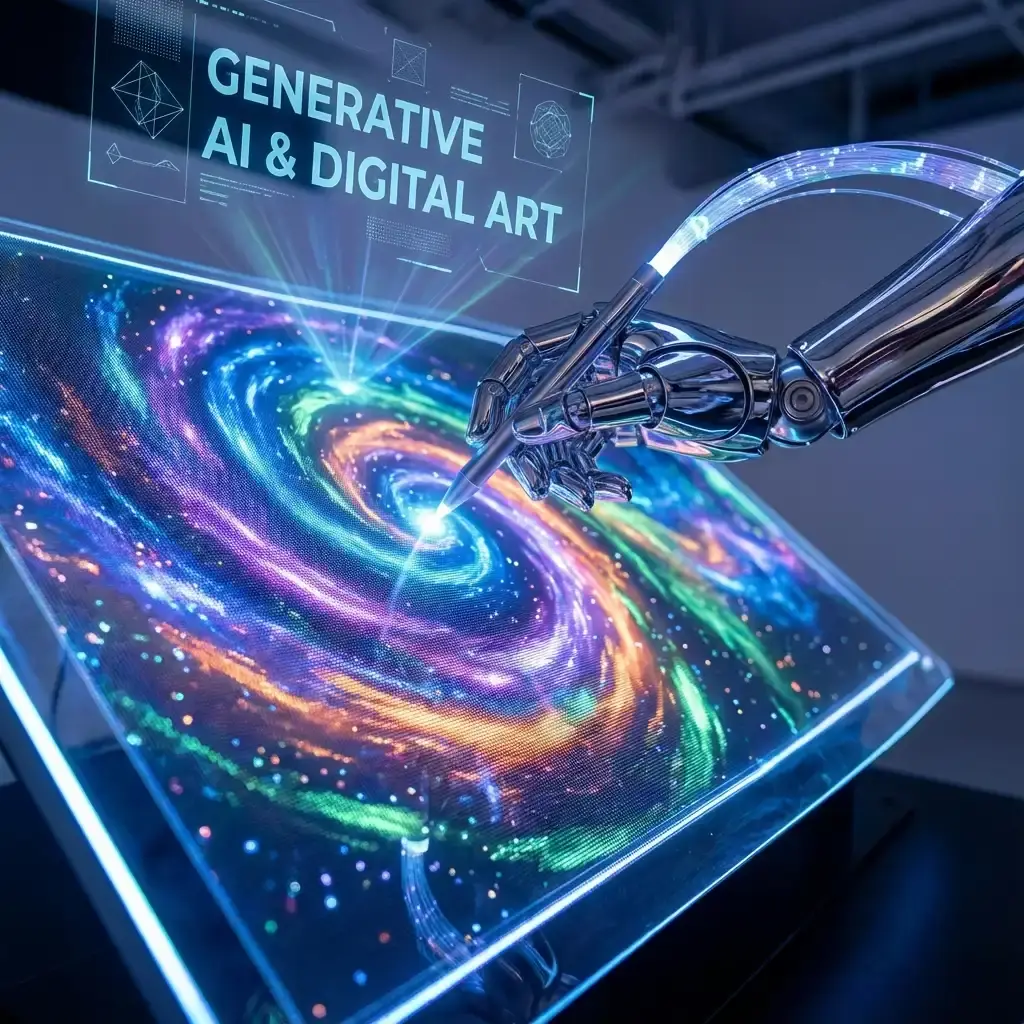
For decades, digital art simply replicated traditional artistic processes in a digital environment. The brush became a stylus, the canvas became a screen, and paint became pixels. While the medium changed, the workflow remained essentially the same: artists still had to manually construct every element from scratch. Today, that paradigm is changing. We are no longer just digitizing the pencil we are moving beyond it. Generative Artificial Intelligence is not merely a faster tool; it is a creative collaborator that is redefining how ideas become images and fundamentally expanding the boundaries of what is possible.
From Manual Creation to Conceptual Direction
Tools such as Midjourney, DALL·E, and Stable Diffusion allow creators to translate abstract ideas into visual form through natural language. Instead of starting with a blank canvas and building upward, artists now start with a concept, a mood, or a narrative and let the system generate visual interpretations in seconds. This has shifted the artist’s role from pure execution toward creative direction, conceptual thinking, and intelligent curation.
Rather than spending forty hours painting a complex background, an artist can generate multiple variations instantly, select the most promising one, and then apply their own expertise to refine it. They adjust lighting, correct anatomy, redesign composition, and layer in personal style and meaning. This human-AI synergy dramatically increases productivity and creative freedom, enabling faster iteration, deeper experimentation, and the confidence to pursue bolder artistic ideas without prohibitive time or cost constraints.
Is Artificial Intelligence Replacing Artists?
The short answer is no. While Artificial Intelligence can produce visually impressive results, it does not possess intention, emotion, or cultural awareness. A machine does not understand why a particular color palette feels nostalgic, why a shadow can imply loneliness, or why a certain framing evokes intimacy. It can mimic patterns, but it cannot assign meaning. That interpretive and emotional layer the soul of the artwork still comes entirely from the human creator.
Artificial Intelligence can generate images, but artists create messages. The difference lies not in output quality, but in purpose. The artist decides what should exist, why it should exist, and what it should communicate. Artificial Intelligence merely assists in materializing that vision.
Why Post-Processing Still Matters
Artificial Intelligence-generated images are rarely perfect. They may contain subtle anatomical distortions, inconsistent textures, strange lighting, or elements that do not align with a project’s technical requirements. This is where traditional tools remain essential.
Manual editing, retouching, compositing, and cropping transform raw outputs into professional-grade assets. Removing artifacts, fixing proportions, adjusting colors, and formatting images to exact specifications ensures quality, consistency, and usability. Artificial Intelligence accelerates creation, but craftsmanship still defines excellence.
Preparing for an AI-Augmented Creative Future
The most successful artists in the coming years will not be those who reject Artificial Intelligence, nor those who rely on it blindly, but those who learn how to integrate it thoughtfully into their workflow. From ideation and concept exploration to refinement, post-processing, and final high-resolution export, Artificial Intelligence becomes a powerful extension of the creative process.
Mastering this hybrid workflow is the new competitive advantage. It allows creators to move faster, explore further, and produce more without sacrificing originality or artistic integrity.
The future of art is not human versus machine. It is human with machine versus human without it.