The Rise of AI Image Compression: Zero Quality Loss at Half the Size
Meet the next generation of image optimization. Learn how neural networks are outperforming JPG and PNG to make the web faster than ever.
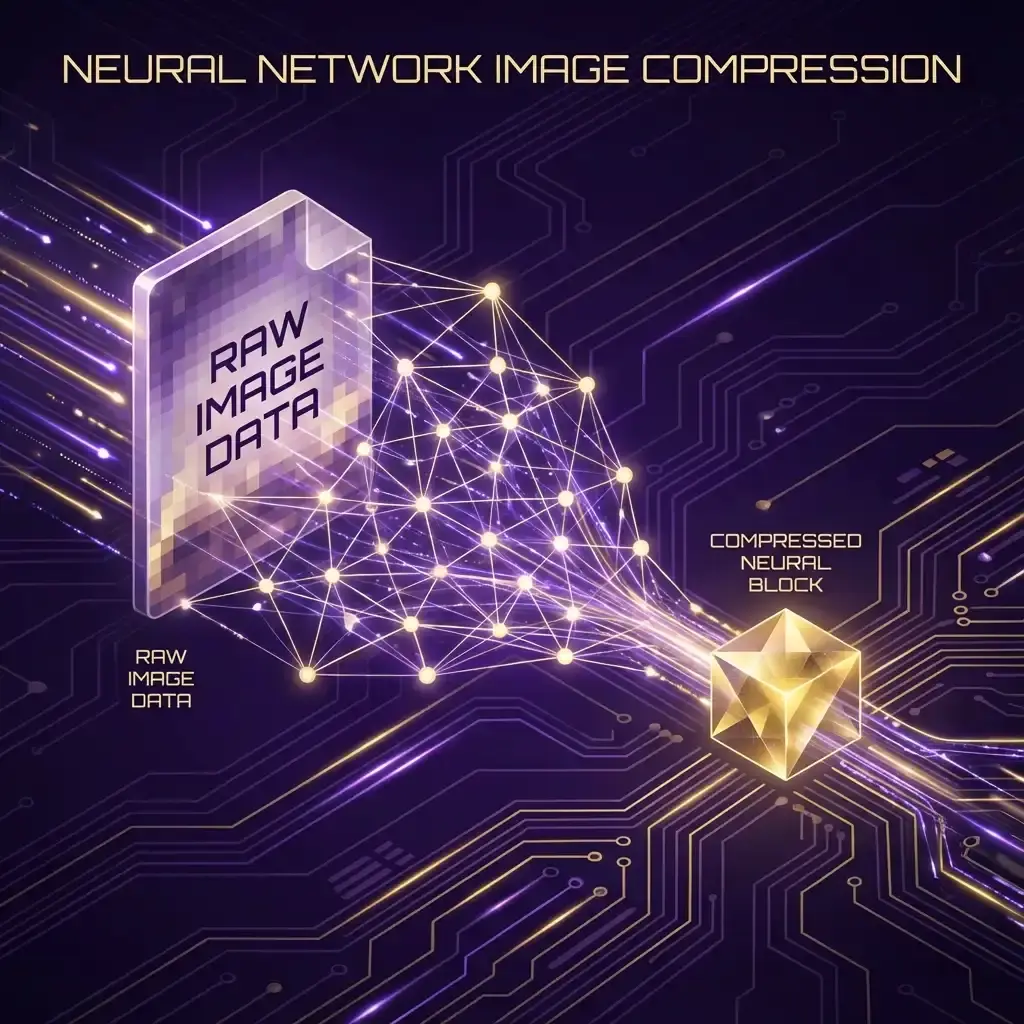
The battle for web performance has a new champion: AI-based Image Compression. While standard formats like JPEG and PNG rely on mathematical formulas to discard data, AI uses neural networks to 'predict' and reconstruct information, leading to significantly smaller files without the usual 'blocky' artifacts. Recent breakthroughs in Semantics-Guided Generative Compression are pushing these limits even further.
How Neural Compression Works
Instead of just thinning out color data, AI compression models (like those used in modern AVIF encoders or research-grade GANs) learn the underlying structure of an image via Neural Compression and Semantic Guidance.
When the image is decoded, the AI 're-imagines' the details based on that map. This allows for file sizes that are often 50% smaller than traditional WebP files while looking identical to the human eye. This works perfectly alongside AI Background Removal for clean, efficient assets.
The Benefits for Modern Web Performance
Faster LCP: Large Contentful Paint (LCP) scores improve drastically when hero images are 80% smaller.
Mobile-First SEO: On slow 4G/5G connections, AI-compressed images load instantly, reducing user bounce rates.
Reduced Storage Costs: For platforms hosting millions of images, these savings translate to thousands of dollars in server costs.
Manual vs. AI-Assisted Compression
While we wait for AI formats to become the universal standard, you can get similar results today by using our Compress PNG and JPG tools. These tools use 'soft' AI to intelligently decide which parts of an image can be compressed more aggressively without affecting perceived quality.
Conclusion
AI image compression is more than just a technical curiosity; it is a vital part of the future of a fast, accessible internet. By staying ahead of these trends, site owners can provide superior user experiences that competitors using 'old-school' formats simply can't match.